ITINERARY
DAY 1: MONDAY - LIMA PICK UP
Upon arrival reception and transfer to the select hotel - overnight (no meals)
DAY 2: TUESDAY - LIMA CITY TOUR
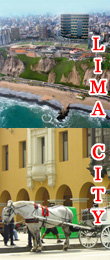
This tour could start in the morning 9:30 am or 2:30pm. You will be picked up from you hotel. This excursion offers the best combination of the differents attractions in Lima and its three historical periods: pre-hispanic, colonial and contemporary. In Lima, there were several different pre-columbian cultures which are dated thousands of years back. Lima was part of the Inca Empire until was founded by the spaniard Francisco Pizarro on the 18th. of January, 1535. During our guided tour we will travel along its millenary history.
ANCESTRAL LIMA. At the Huaca Pucllana, an archaeological precint build in the IV century A.C., we will have a panoramic view of this magnificent ceremonial and administrative centre which was considered by the Incas a holy village. We will learn about the life and rituals of its ancient inhabitants and admire its typical piramidal building, very characteristic of sacred pre-hispanic edifications which were adored in the coast of Perú.
COLONIAL LIMA. The peruvian Viceroyalty was the most important one in the Spanish Empire and Lima was its capital. The highlights of its historical centre are its architecture and the urban design of the city, found in thold streets filled with colonial houses adorned with moorish-style balconies. Our trip includes the Paseo de la Republica (Promenade of the Republic), Plaza San Martin(San Martin Square) and the Plaza Mayor (Main Square), with their different buildings: Palacio de Gobierno (Government Palace), Palacio Arzobispal the (Archibishop's Palace), the Basilica Catedral (Cathedral Basilica) and the Palacio Municipal (Municipal Palace). We will enter the monumental Convento de San Francisco (Convent of Saint Francis), which displays the biggest collection of religious art in America. We can admire the Choir Room and the Monks’ Library, the Sacristy, with its collection of Zurbaran and Rivera paintings. The Big Patio of the Main Cloister, decorated with sevillan tyles from the XVI century, its beautiful moorish arches and its subterranean crypts known as The Catacombs, where you will feel the presence of Lima's colonial past.
CONTEMPORARY LIMA Visit to the most traditional residential areas in the capital: The Olive Grove of San Isidro, Miraflores and Larco Mar, distinctive tourist centre of contemporary Lima.
After the tour transfer to you hotel. Overnight. breakfast included.
DAY 3: WEDNESDAY - LIMA / CUSCO
You will be picked up from your hotel and transfer to the airport for your flight to Cusco (airfare included) upon arrival reception and transfer to the select hotel, morning at leisure to acclimatize to the altitude. In the afternoon 2;00pm you will be taken on a city tour and visit a local archeological sites, the Cathedral, Koricancha, Sacsayhuaman and surroundings returning later afternoon 5:30pm to your hotel around and enjoy the hospitality of the local people (B).(no meals included).

DAY 4: THURSDAY - SACRED VALLEY
After breakfast at 8:45am you will be taken through the Inca Sacred Valley where life has remained almost unchanged for 500 years. You will visit the impressive village of Pisac and the Indian market, enjoy the beautiful handicrafts on sale and wonder at the many ethnic tribal costumes worn, not just for tourists, but as part of their heritage by the local people. The tour also include the visit to Ollantaytambo fortress and the Chinchero Market Before returning to your hotel in Cusco late afternoon (around 6:30pm)(breakfast and Lunch included)
DAY 5: FRIDAY - MACHU PICCHU 2days 1 night by train (More information about Machu Picchu)
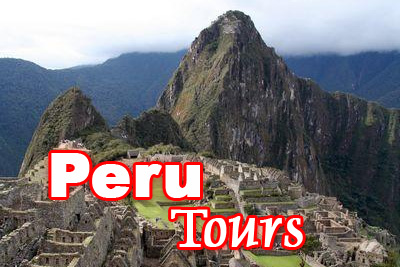
Early morning 5:30am and after breakfast, we'll depart to the train station to our journey to Machu Picchu on Vistadome Train. (4 hours) at 9:40am you will arrive to the Aguas Calientes Town from where you will have to take 20 minutes bus to the Archeological site; Once there where you will have a guided tour with an English speaking professional guide follow by some time at leisure, stay overnight in the area or town relax at the nearby hot springs (entrance not included) (breakfast and lunch included)
DAY 6: SATURDAY - MACHU PICCHU - CUSCO
Morning at leisure by your own, you can visit the ruins early next day when the full magnificence of the site reveals itself in all its majesty (entrance and bus fee for this day not included on the rate) return to Cuzco where you will arrive around 7:30pm. (breakfast included)
DAY 7: SUNDAY - TRANSFER CUSCO - LIMA / LIMA - QUITO
Pick up from your hotel and transfer to the airport -
FLIGHT : Cusco - Lima
FLIGHT INTERNATIONAL : Lima to Quito (Ecuador)
QUITO PICK UP
Upon arrival in Quito, reception and transfer to the select Hotel
(Breakfast included) overnight
DAY 8: MONDAY - GALAPAGOS (BARTRA AIRPORT) (More information about The Galapagos Islands)
Departure from Quito or Guayaquil to Baltra (2 and half flight). Passengers are picked up at the airport by our guides and taken to the pier to board the M/V Galapagos Legend.
North Seymour
Dry landing. Guests wil encounter swallow tailed gulls and sea lions. This site is a major nesting colony of blue footed boobies, and has the largest colony of the magnificent frigate bird. Travelers will also spot both the marine iguanas and land iguanas.
DAY 9: TUESDAY - SANTA CRUZ (DRAGON HILL)
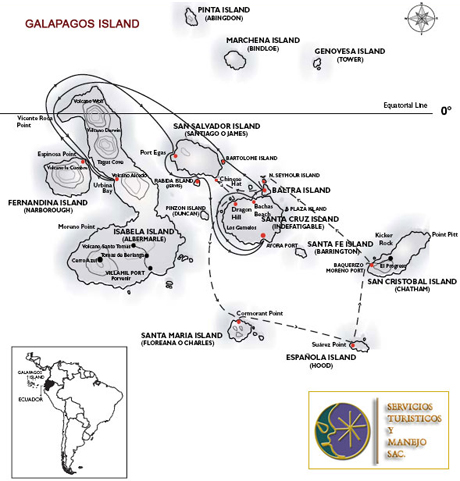
Dry landing. Passengers walk to a saltwater lagoon behind the beach, where on occasion many pink flamingos can be observed. This trail leads up to Dragon Hill, which offers a lovely view of the bay. This is a nesting site for reintroduced land iguanas, and there is also a Holy Stick Forest.
Floreana (Cormorant Point)
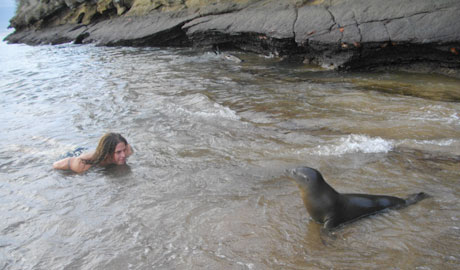
Wet landing on a greenish colored sand beach. Visitors will hike from the black mangrove beds to a large, brackish lagoon, which holds one of the biggest flamingo populations in the Galapagos. This island features endemic plants such as Scalesia villosa, Galapagos daisies, white and black mangrove, and holy stick. Novice snorkelers can practice on the main beach with the playful sea lions. Please keep in mind this is an open-water activity; there is nothing to step on.
DAY 10: WEDNESDAY - ESPAÑOLA (SUAREZ POINT)
Dry landing. Visitors will learn more about the lava terrain and cross the inactive lava fields.
Besides the sea lion colonies, this is a very important site for bird watching. Various bird species such as the mockingbird of Española, Nazca booby and tropic bird can be spotted and observed from very close.
You will also see a large colony of marine iguanas, lava lizards, and rally light foot crabs.
After a short trek visitors encounter colonies of Nazca and blue-footed boobies. The nesting grounds sometimes overlap the trail. Visitors will also find Galapagos doves, hawks and swallow-tailed gulls and then reach the world’s largest colony of waved albatross.
A major highlight is their mating season, from May through December. You’ll visit the famous blowhole, where water shoots into the air about 23 m (75 ft).
San Cristóbal (Interpretation Center or La Galapaguera)
Dry landing at Puerto Baquerizo Moreno. Passengers will visit San Cristóbal breeding center and learn about the National Park’s breeding program with the giant tortoises.
Passengers will observe some animals in their natural environment.
Passengers will also have the opportunity to the visit the town and go shopping for souvenirs and arts and crafts.
DAY 11: THURSDAY - SANTA CRUZ (CARRIONT POINT)
Today, passengers can choose either a ride in an outboard motorboat to observe the Galapagos fur seal, seabirds and marine wildlife or go snorkeling to see a variety of tropical fish, manta rays or even harmless white-tipped reef sharks. Return to the Galapagos Legend
Bartolomé
Dry landing. Passengers will see volcanic formations like lava bombs, spatter, and cinder cones. After a hike to the summit you’ll be impressed by the view of the surrounding islands, including the eroded tuff cone of Pinnacle Rock.
During the hike to the summit, travelers will often see colonies of marine iguanas, lava lizards, tiquilla, lava cactus, Scalecia tree and others.
Visitors will be able to snorkel and see the Galapagos penguin, sea turtles, and white tipped sharks from a safe distance.
DAY 12: FRIDAY - URBINA BAY (ISABELA)
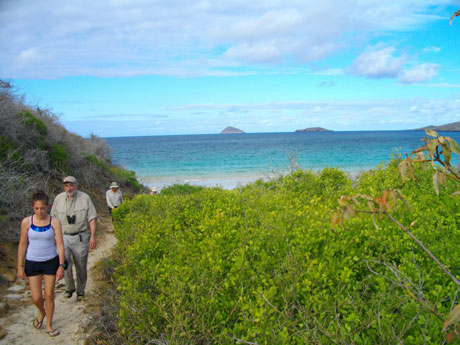
Wet landing. Passengers will visit the volcanic ash beach and coral area. Depending on the season you may be able to observe giant tortoises, land iguanas and flightless cormorants. After the walk we will have time for snorkeling.
Fernandina (Espinosa Point)
Dry landing. Visitors will see the biggest marine iguanas mingling with sally-light foot crabs, as well as flightless cormorants nesting sites, Galapagos penguins, Galapagos hawks, and sea lions.
Among the flora and volcanic formations observers will spot brachycereus cactus, and “pa-hoe-hoe” lava and “AA” lava formations. Numerous mangrove beds extend into the sea.
DAY 13: SATURDAY - SANTIAGO (EGAS PORT)
Wet landing on a beach of dark sand (volcanic ash). Most of the landscape is comprised of layers of rocks and lava flows. Here you can see great blue herons, striated herons, yellow-crowned night herons and American oystercatchers.
Passengers will see marine iguanas grazing upon algae beds alongside red sally light-foot crabs. There is a colony of fur-seals swimming in pools of cool water.
This is a place where you can swim, snorkel and look for squid, starfish and a variety of colorful tropical fish.
Rábida (Jervis)
Wet landing. The volcano-formed beach is dark red and frequented by sea lions. It’s considered the geographic center of Galapagos because it has the most diverse volcanic rocks on the Islands.
You’ll hike to a salt water lagoon, where flamingos can sometimes be found.
July through September is a good time to observe brown pelicans nesting in the salty bushes. Boobies and 9 species of Darwin’s finches can also be observed. You can take a dinghy ride by the reefs, as well as snorkel..
DAY 14: SUNDAY - SANTA CRUZ (CHARLES DARWIN RESEARCH STATION)
Here you will be able to observe the giant tortoises that are part of the reproduction program and the world’s most famous tortoise, Lonesome George, the last surviving specimen of his species.
Visitors can also admire the prickly-pear cactus forest and many land birds. Later on, you’ll have some free time to walk around town and shop for souvenirs.
Santa Cruz (Highlands)
Travelers can trek through the highlands of Santa Cruz and visit Cerro Chato, where you’ll be able to observe the famous giant tortoises in their natural habitat.
Additionally, travelers can walk inside the dormant lava tubes.
DAY 15: MONDAY - SANTA CRUZ (BACHAS BEACH)
Wet landing. This beach is located on north side of Santa Cruz Island.
Here you will encounter many sea birds, marine iguanas, sea turtles, and have the opportunity to swim on the white sand beach.
Return to the Galapagos Legend, check out and transfer to the Baltra’s airport. Return flight to Quito via Guayaquil.
INCLUDE:
Private transfers, professional bilingual guide service, entrance fee, and meals as specify in the program.
include the flight tickets:
Lima - Cusco
Cusco - Lima
Lima - Quito
Quito - Galapagos
Galapagos - Quito
NOT INCLUDED:
International airfares, airport departure taxes or visa fees, excess baggage charges, extra expenses for flight cancellations, alcoholic and non-alcoholic beverages or bottled water, snacks, insurance of any kind, laundry, phone calls, reconfirmation of international flights and items of personal nature.
GALAPAGOS ISLANDS (ECUADOR)
The Galapagos Archipelago is located on both sides of the equatorial line approximately 970 km (600 miles) west from continental Ecuador. Local time is -6 GMT. It is formed by thirteen greater islands, six smaller islands, 42 islets and several rocks, which cover a total area of 7,850 km². The largest island is Isabela, with a total area of 4,590 km² which presents the highest point of the archipelago, volcano Wolf, 1,690 meters. 97% of the total area of the isles belongs to the Galapagos National Park, the rest belongs to inhabited and developed areas like the island of Santa Cruz, San Cristobal, Isabela and Floreana, in addition to Baltra an island occupied by the Ecuadorian Armed forces. The Galapagos Archipelago is also a province of Ecuador, whose capital is Puerto Baquerizo Moreno, on the island of San Cristobal. Puerto Ayora, on the island of Santa Cruz, is the city with the highest tourist activity. The islands total population including floating population is around 16,109 inhabitants.
Options for flying into the Galapagos are limited to two islands; San Cristobal and Baltra. Private aircraft must use Baltra as it is the airport equipped with overnight plane accommodations. Seymour Airport on Baltra was recently renovated (2012–2013) to accommodate larger planes.
Until 1969 the only way to visit was on a private or chartered vessel. There was no regular air service until Forrest Nelson's Hotel Galapagos began the first organized tours in April 1969. Soon other travel companies brought in tour ships and yachts,[26] and local fishermen began converting their wooden boats for rudimentary cruising with guests. These vessels were the main source of overnight accommodations in the Galapagos. Today there are about 85 yachts and ships equipped for overnight guests. In 2006 the Baltra military governed island, was opened up to limited overnight camping. Baltra also requires permits by the military government for overnight stays on the beach. Other inhabited islands also allow camping on the beaches designated as "recreational" use to the locals. All of these camping permits are limited to number of people and nights, with most nights not to exceed 3.
Land based hotels are opening on the inhabited islands of San Cristobal, Santa Cruz, Floreana and Isabela. By 2012, more than half the visitors to Galapagos made their tours using day boats and these small hotels. Restaurants, easy access and economy make this an attractive travel option. The cruise tours are still the best way to see all the complex environment and wildlife of the islands.
There are only 116 visitor sites in the Galapagos: 54 land sites and 62 scuba-diving or snorkeling sites. Small groups are allowed to visit in 2–4 hour shifts only, to limit impact on the area. All groups are accompanied by licensed guides.
MACHU PICCHU (PERU)
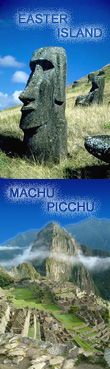
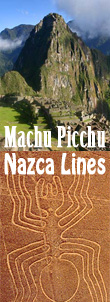
Machu Picchu "old peak", is a 15th-century Inca site located 2,430 metres (7,970 ft) above sea level is an outstanding example of man's interaction with his natural environment, in the midst of a tropical mountain forest in an extraordinarily beautiful setting, Machu Picchu was probably the most amazing urban creation of the Inca Empire at its height. It is located in the Cusco Region, Urubamba Province, Machupicchu District in Peru. It is situated on a mountain ridge above the Sacred Valley which is 80 kilometres (50 mi) northwest of Cusco and through which the Urubamba River flows. Most archaeologists believe that Machu Picchu was built as an estate for the Inca emperor Pachacutec (1438–1472). Often referred to as the "Lost City of the Incas", it is perhaps the most familiar icon of Inca civilization.
Embedded within a dramatic landscape at the meeting point between the Peruvian Andes and the Amazon Basin, the Historic Sanctuary of Machu Picchu is among the greatest artistic, architectural and land use achievements anywhere and the most significant tangible legacy of the Inca civilization. Recognized for outstanding cultural and natural values, the mixed World Heritage property covers 32,592 hectares of mountain slopes, peaks and valleys surrounding its heart, the spectacular archaeological monument of “La Ciudadela” (the Citadel) at more than 2,400 meters above sea level. Built in the fifteenth century Machu Picchu was abandoned when the Inca Empire was conquered by the Spaniards in the sixteenth century. It was not until 1911 that the archaeological complex was made known to the outside world.
The approximately 200 structures making up this outstanding religious, ceremonial, astronomical and agricultural centre are set on a steep ridge, crisscrossed by stone terraces. Following a rigorous plan the city is divided into a lower and upper part, separating the farming from residential areas, with a large square between the two. To this day, many of Machu Picchu’s mysteries remain unresolved, including the exact role it may have played in the Incas’ sophisticated understanding of astronomy and domestication of wild plant species.
The massive yet refined architecture of Machu Picchu blends exceptionally well with the stunning natural environment, with which it is intricately linked. Numerous subsidiary centres, an extensive road and trail system, irrigation canals and agricultural terraces bear witness to longstanding, often on-going human use. The rugged topography making some areas difficult to access has resulted in a mosaic of used areas and diverse natural habitats. The Eastern slopes of the tropical Andes with its enormous gradient from high altitude “Puna” grasslands and Polylepis thickets to montane cloud forests all the way down towards the tropical lowland forests are known to harbour a rich biodiversity and high endemism of global significance. Despite its small size the property contributes to conserving a very rich habitat and species diversity with remarkable endemic and relict flora and fauna.
The Galapagos Island
|